


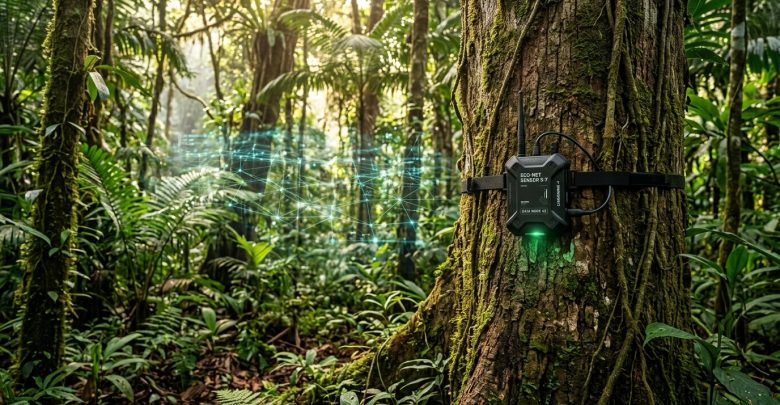
The Internet of Things (IoT) is often associated with smart homes and industrial efficiency, but its most profound impact may be in the realm of environmental conservation. By leveraging Big Data, sensors, and real-time connectivity, IoT is becoming a powerful guardian of our ecosystem and biodiversity.
1. Stopping Deforestation with Real-Time Data
Deforestation accounts for roughly 15% of global $CO_2$ emissions. To combat this, organizations like Rainforest Connection are deploying innovative IoT projects.
- Acoustic Sensors: By attaching sensors (often repurposed mobile devices) to trees, they can detect the specific sounds of illegal logging, such as chainsaws or heavy machinery.
- Instant Alerts: These sensors transmit data remotely, alerting authorities in real-time so they can intercept illegal activities before significant damage occurs.
2. The “Internet of Bees”: Protecting Vital Pollinators
Bees are essential for global food security, yet their populations are in sharp decline. IoT technology is helping beekeepers protect these vital insects:
- Hive Monitoring: Companies like Bee Corp use internal sensors to track hive temperature. Since bees maintain a constant temperature for brood rearing, fluctuations can alert beekeepers to the health status of the queen and the colony.
- Precision Tracking: In Australia, the CSIRO institute has equipped thousands of bees with RFID-like micro-sensors. This data helps researchers identify why pollination rates are dropping and what environmental factors are affecting bee behavior.
3. Smart Surveillance Against Poaching
Protecting endangered species in vast, remote habitats is a logistical nightmare. IoT is providing a digital solution:
- Acoustic Detection: Similar to forest monitoring, audio sensors detect gunshots, traps, or illegal vehicle movements in protected zones.
- RAPID Project: In Africa, rhinos are being equipped with a smart trio: a camera, a heart-rate monitor, and a GPS tracker.
- If a rhino is threatened, the device triggers an immediate alert.
- Guardians can track the animal’s location in real-time and even access video footage of poachers, significantly increasing the chances of rescue and capture.
Why This Matters
The shift toward “Green IoT” proves that connectivity isn’t just about convenience—it’s about survival. By automating the monitoring of our natural world, we can move from reactive conservation to proactive protection. As these technologies become more affordable and accessible, we can expect a global increase in the use of IoT to safeguard the biodiversity that sustains life on Earth.
Tags: #GreenIoT #EnvironmentalConservation #SmartTechnology #Biodiversity #Sustainability #TechForGood #ClimateAction