


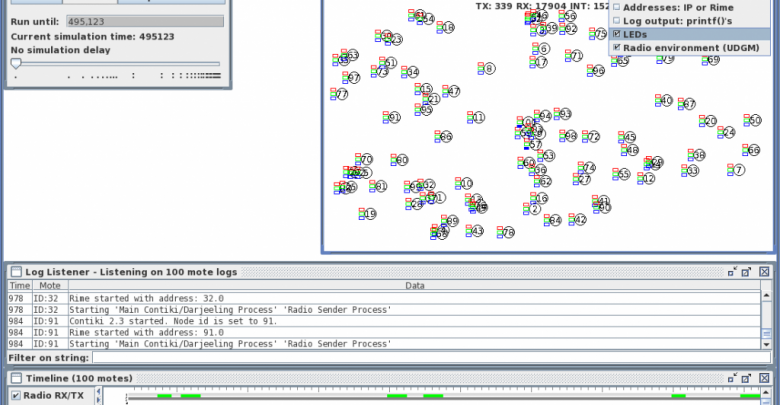
If you’ve ever wondered how developers build complex networks for the Internet of Things (IoT) without buying thousands of physical devices, the answer lies in simulation. Today, we’re diving into two essential tools for any IoT engineer: Contiki-OS and its powerful simulator, Cooja.
What is the Internet of Things (IoT)?
We are currently surrounded by gadgets, smartphones, and wireless nodes that connect to the digital world in real-time. The IoT enables these real-world objects to interact, share data, and exchange information for better productivity while maintaining security.
First coined by Kevin Ashton in 1999, the IoT has evolved significantly due to high-quality wireless technologies like RFID tags and sensors, which allow remote monitoring via software applications.
Why Contiki and Cooja?
- Contiki-OS: This is a popular, free, and open-source operating system specifically designed for IoT devices. It uses the BSD license and is built on the C programming language, making it highly efficient for low-power wireless networks.
- Cooja Simulator: Cooja is the network simulator for Contiki. It allows developers to simulate both small and large networks of Contiki-based “motes” (wireless nodes).
Getting Started: A Practical Approach
You can download the Instant Contiki environment from SourceForge, which is provided as a compressed file. Once extracted, it can be run using VMware Player, a free virtualization tool. The default password for the Contiki environment is ‘user’.
Creating Your First Simulation
Once the OS is loaded, you can launch the Cooja simulator from the terminal.
- New Simulation: In the File menu, select “New Simulation” and define your network parameters, such as radio medium and startup delay.
- Adding Motes: You can add various wireless devices, known as “motes,” to your workspace. These can also be interfaced in real-time using physical ports.
- Programming: Every mote is defined by basic specifications and an API. You can modify the C source code in the back-end of Cooja and recompile it to achieve the desired output.
- Analysis: After the simulation runs, you can analyze the network log files, which detail the source and destination motes, timestamps, and activity.
Security: The Non-Negotiable
Given the use of IoT in critical infrastructure and military applications, security is paramount. It is essential to implement robust communication security protocols and dynamic key exchange algorithms to prevent any potential breaches.
Conclusion
The IoT market is booming, with projections reaching hundreds of billions of dollars. Whether you are working on smart cities, industrial IoT, or wearable tech, mastering Contiki and Cooja provides a solid foundation for testing and deploying reliable, secure IoT solutions.
Tags: #IoT #ContikiOS #Cooja #EmbeddedSystems #NetworkSimulation #IoTDevelopment #TechTutorial #WirelessSensors