

The agricultural sector is undergoing a massive transformation, driven by the need to increase food production for a growing global population while conserving limited resources. The integration of the Internet of Things (IoT) into farming—commonly known as smart farming or precision agriculture—is revolutionizing traditional agricultural practices.
What is IoT in Agriculture?
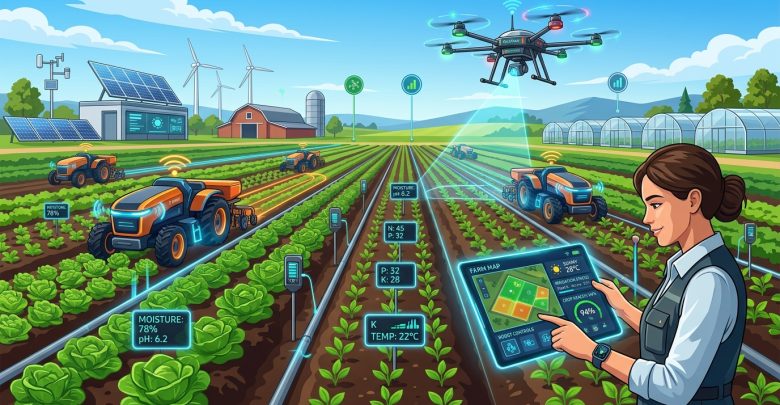
IoT in agriculture involves deploying a network of connected sensors, devices, and automated systems across farmlands. These devices continuously collect, transmit, and analyze real-time environmental and biological data—such as soil moisture, temperature, humidity, and crop health—allowing farmers to make data-driven decisions rather than relying on guesswork.
Key Smart Farming Solutions and Applications
- Precision Irrigation and Water Management
- Traditional irrigation often wastes significant amounts of water. IoT soil moisture sensors monitor water levels across different zones of a field in real time.
- Automated irrigation systems can then deliver the precise amount of water needed directly to the crops, conserving resources and reducing utility costs.
- Crop Monitoring and Health Management
- Using IoT sensors and drones equipped with multispectral imaging, farmers can monitor crop growth stages and detect early signs of diseases, pest infestations, or nutrient deficiencies.
- Early detection enables targeted treatments, minimizing the use of chemical pesticides and fertilizers.
- Livestock Monitoring and Tracking
- IoT-enabled wearable tags and collars allow ranchers to track the location, health, and biometrics of individual animals.
- Farmers receive instant alerts regarding abnormal body temperatures, sickness, or distress, improving livestock welfare and preventing the spread of diseases.
- Smart Greenhouses and Climate Control
- In greenhouse farming, IoT systems automatically regulate internal microclimates by controlling ventilation, heating, lighting, and humidity based on real-time external weather data.
- This creates an optimal growing environment year-round, regardless of external weather conditions.
- Fleet Management and Predictive Maintenance
- Agricultural machinery (such as tractors and harvesters) equipped with GPS and IoT diagnostics can be tracked and monitored remotely.
- Predictive maintenance alerts farmers to potential engine or mechanical failures before they happen, minimizing costly downtime during critical harvest seasons.
Benefits of Smart Farming
- Resource Efficiency: Optimal use of water, fertilizers, and energy leads to significantly lower operational costs.
- Increased Yield and Quality: Precise management and timely interventions maximize crop output and quality.
- Environmental Sustainability: Reduced chemical runoff and efficient resource utilization protect local ecosystems and lower the carbon footprint of farming operations.
Conclusion
The adoption of IoT and smart farming solutions is no longer just a futuristic option; it is a necessity for modern agriculture. By bridging the gap between raw data and physical farming operations, IoT empowers agricultural businesses to achieve higher productivity, sustainability, and profitability in a competitive global market.
#SmartFarming #AgTech #IoT #PrecisionAgriculture #SustainableAgriculture #AgriTechTrends