


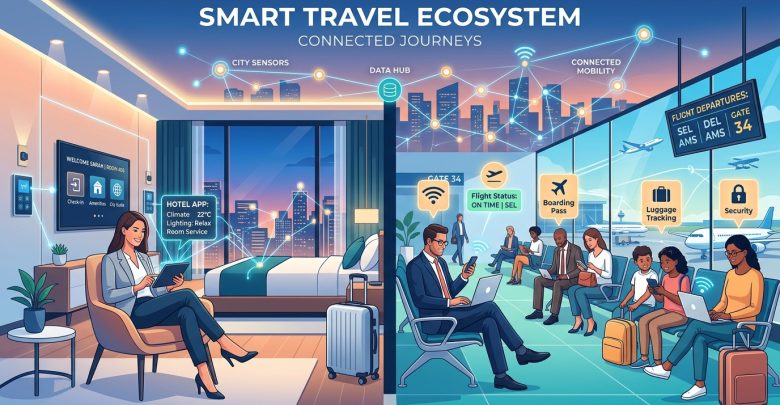
The tourism industry is currently facing a dual challenge: the need for constant innovation and the demand for cost-effective services. Driven by intense competition and the need for superior customer experiences, the travel sector has become a pioneer in adopting the Internet of Things (IoT).
With 86% of airlines anticipating a positive business impact from IoT within the next three years, this technology is streamlining operations for airlines, hotels, and travel agencies alike. Here are the 8 key applications of IoT in the tourism industry:
1. Hyper-Personalization
Hotel rooms equipped with smart tablets allow guests to personalize their environment. From adjusting temperature and lighting moods to setting custom alarms, these features create a “home away from home” experience, significantly boosting guest loyalty.
2. Smart Access & Security
Hotels can now send digital keys directly to a guest’s smartphone. Combined with NFC-enabled smart locks, this allows for a seamless, self-service check-in process while ensuring robust security.
3. Real-Time Information
Travel agencies utilize smartphones to keep travelers informed. Passengers receive instant flight updates, navigation assistance upon arrival, and critical safety notifications, making travel transitions smoother.
4. Enhanced In-Flight Experience
Modern aircraft are integrating sensors into seats to monitor a passenger’s health metrics—such as heart rate and stress levels. This data enables cabin crew to provide proactive assistance when needed.
5. Streamlined Operations
Lost luggage is a major pain point in travel. With RFID tags attached to suitcases, travelers can track their belongings in real-time via their smartphones, significantly reducing stress and operational complications.
6. Superior Customer Service
By analyzing data from guest feedback and service interactions, tourism companies can tailor their offerings. Automated sentiment analysis helps identify and resolve issues quickly, fostering brand loyalty.
7. Automation
IoT enables hotels to manage supply chains with precision and allows travel companies to centralize the monitoring of security cameras and various sensors, ensuring a safer environment for travelers.
8. The Smart Tourist Experience
Cities are becoming smarter by installing sensors in parks, buses, and parking areas. Using AI and machine learning to process this data, city officials and tourism operators can analyze tourist behavior patterns to create better, more tailored urban travel experiences.
Efficiency and Maintenance
Beyond guest experiences, IoT is vital for backend efficiency:
- Predictive Maintenance: Sensors on aircraft provide real-time performance data, allowing for maintenance before issues arise.
- Energy Optimization: IoT helps monitor and reduce energy waste in hotels and aircraft (fuel, heating, and cooling), leading to significant cost savings.
Conclusion
IoT is still in its infancy, yet its potential to transform the tourism industry is massive. From automating registration to optimizing energy usage and enhancing safety, IoT simplifies every aspect of the travel journey. Companies that invest in the necessary infrastructure and data processing capabilities today will be the leaders in tomorrow’s digital tourism economy.
Tags: #IoT #TourismTech #SmartTravel #Innovation #DigitalTransformation #Hospitality #Aviation #TravelIndustry