


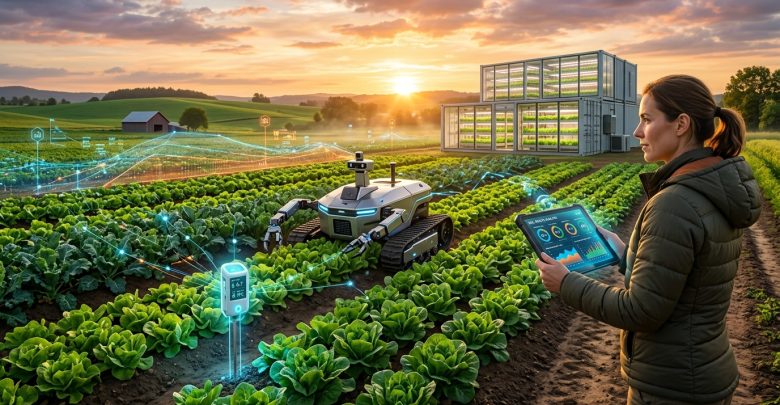
Agriculture, an industry as old as civilization, is undergoing its most significant transformation yet. The rise of AgriTech—the intersection of advanced technology and farming—is turning traditional fields into data-driven hubs, automating labor-intensive tasks, and providing farmers with unprecedented insights into their crops and environment.
1. IoT Sensor Technology: The Farmer’s New Tools
In modern farming, smartphones and tablets have become as essential as the plow. Leveraging the Internet of Things (IoT), farmers can now monitor variables previously invisible to them, such as soil moisture, micro-climatic conditions, and nutrient levels.
- Precision Instruments: Companies like Arable have developed advanced tools like the PulsePod, a six-band spectrometer that measures rainfall, hail, leaf moisture, and environmental stress.
- Data-Driven Management: These devices provide “unprecedented visibility,” allowing farmers to manage crops based on precise weather patterns, predict future yields, and proactively mitigate risks like droughts or potential food crises.
2. Urban & Indoor Farming
Urban agriculture now accounts for approximately 20% of the world’s food production. Technology is making it possible to grow high-quality produce in the middle of cities with minimal environmental footprints.
- Smart Home Farming: Startups like Leaf offer automated systems for indoor growth, where lights, water pumps, and nutrient levels are controlled entirely via smartphone apps.
- Container Farming: Freight Farms utilizes converted shipping containers to create mobile, optimized growing environments. Using IoT platforms like Xively, farmers can remotely monitor CO2, humidity, and temperature, ensuring optimal growth even in areas where traditional agriculture is impossible due to climate or space constraints.
3. Insects and Alternative Nutrition
With the global need for sustainable protein, technology is optimizing the production of edible insects.
- Scalable Farming: Companies like Tiny Farms use IoT and automation to create smart, scalable insect farming systems. These systems track the “health” of the insect population via sensors and data logging apps, ensuring efficient and hygienic production.
4. The Rise of Agriculture Robots
Demographic shifts show an aging farmer population, raising concerns about the future of manual farm labor.
- Future Workforce: As robotics become more intelligent and cost-effective, they are set to replace human labor in repetitive or dangerous tasks. Robots are increasingly becoming the answer to the shrinking agricultural workforce.
5. Overcoming the Cost Barrier: The Role of NB-IoT
A primary challenge for AgriTech adoption has been the cost of infrastructure. However, as adoption scales, costs are dropping significantly.
- NB-IoT (Narrowband IoT): This technology is a game-changer. It provides deep coverage even in basements, warehouses, and remote fields.
- Energy Efficiency: NB-IoT sensors are incredibly low-power; batteries can last for years without needing replacement, making it economically viable to connect vast, sprawling farmlands to the network.
Conclusion: A Sustainable Future
AgriTech is not merely about using gadgets; it is about solving the fundamental challenges of modern agriculture: increasing yields while reducing waste. By saving on water, fertilizer, and labor, these modern technologies offer a sustainable path forward. As connectivity (via NB-IoT) expands, the ability to make data-backed decisions will move from being a luxury to a standard operating procedure for every farmer globally.
Tags:
#AgriTech #SmartFarming #IoT #PrecisionAgriculture #SustainableFarming #FutureOfFood #NBIoT #UrbanFarming #Innovation #AgroTech