


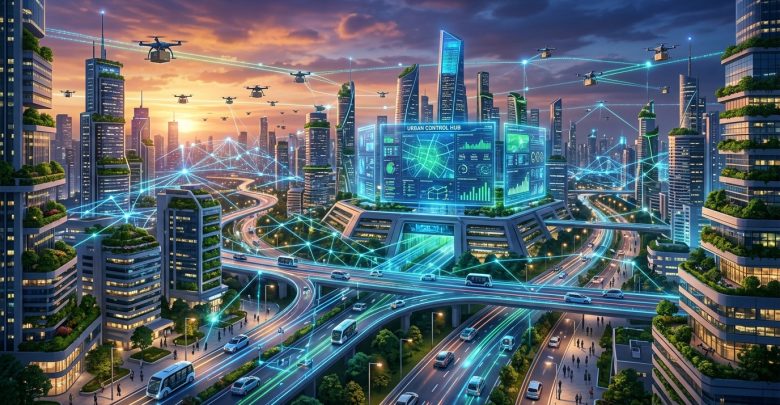
A smart city is a modern concept in urban management that aims to improve citizens’ quality of life, increase resource efficiency, and foster sustainable development by utilizing advanced technologies, the Internet of Things (IoT), and real-time data. Let’s explore the various dimensions of smart cities below:
Definition and Structure of a Smart City
A smart city consists of an interconnected network of sensors, devices, and software that collect and process information in real-time. The primary goal of these systems is to optimize urban infrastructure such as transportation, energy consumption, waste management, and security.
Core Pillars and Dependent Technologies
- Internet of Things (IoT) and Industrial IoT (IIoT): Play an essential role in connecting equipment, sensors, and servers to gather precise data.
- Real-Time Data and Big Data: Enable informed and rapid decision-making for city managers and organizations.
- Cloud Computing: Provides a suitable platform for storing, processing, and expanding data exchanges across the urban management chain.
Key Benefits of Smart Cities
- Optimized Urban Mobility: Utilizing intelligent traffic management and real-time data to reduce congestion and travel time.
- Energy and Environmental Efficiency: Monitoring energy consumption and reducing carbon footprints through automated smart grids and eco-friendly infrastructure.
- Improved Public Safety and Services: Enhancing emergency response times, waste management, and public service delivery using connected sensors and automated systems.
#SmartCity #IoT #UrbanDevelopment #Sustainability #BigData #TechTrends