


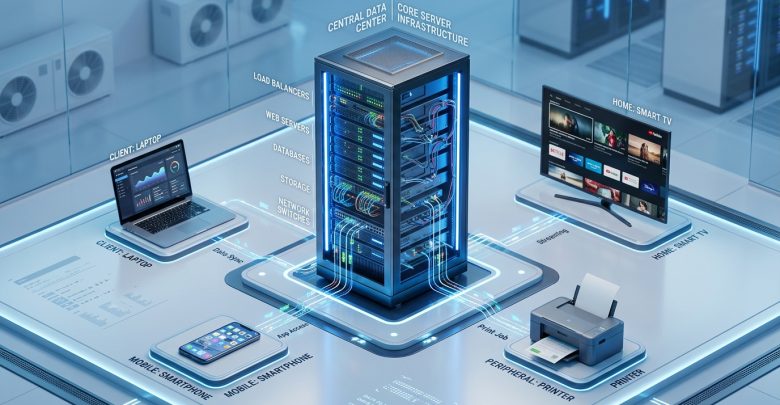
Servers are the backbone of the digital world. Simply put, a server is a computer connected to the internet that stores websites and data, waiting for requests from other computers (clients) to provide information.
The Client-Server Architecture
The relationship between a Server (the service provider) and a Client (the service requester) forms the foundation of modern networking. Whether in a local area network (LAN) or across the global internet, servers are always-on systems designed to share hardware and software resources efficiently.
Operating Systems & Virtualization
To function, servers rely on powerful operating systems and virtualization technologies:
- Linux: Includes distributions like CentOS, Fedora Core, and Debian.
- Windows: Includes all versions, specifically Windows Server editions.
- Virtualization: Platforms like VMware ESX and Hyper-V that allow multiple virtual machines to run on a single physical server.
15 Essential Types of Servers
Every server is specialized for a specific purpose. Here is a breakdown of the most common types:
| Server Type | Function |
| Web Server | Hosts websites and handles HTTP requests. |
| File Server | Centralizes file storage and manages user access rights. |
| Database Server | Provides centralized data processing and storage for applications. |
| Application Server | Executes specific software programs for remote users. |
| Mail Server | Manages the sending, receiving, and storage of emails. |
| Proxy Server | Acts as an intermediary, filtering traffic and providing anonymity. |
| Game Server | Hosts multiplayer online games for group interactions. |
| Media Server | Streams audio and video content without requiring full downloads. |
| Communication Server | Facilitates real-time text, voice, or video communication. |
| Computing Server | Offloads heavy processing tasks from client computers. |
| Printer/Fax Server | Manages printing or faxing queues for network users. |
| Name Server | Maps domain names to IP addresses (DNS). |
| Standalone Server | Operates independently without external infrastructure dependencies. |
| Home Server | Provides services to devices within a residential network. |
| Sound Server | Manages audio hardware and sound processing in a network. |
Key Terminology
- Nameserver: A unique identifier for a server, allowing it to be recognized on the global network (crucial for web hosting).
- Network Server: A server operating within a limited internal network to manage resources and access permissions.
Final Thoughts for Your Readers
Whether you are a developer looking for the right infrastructure or a business owner wanting to understand how your website stays online, understanding server architecture is the first step. By centralizing data and services, servers enable the high-speed, always-on internet experience we enjoy today.
Tags: #ServerArchitecture #Networking #WebHosting #ITInfrastructure #Linux #WindowsServer #CloudComputing