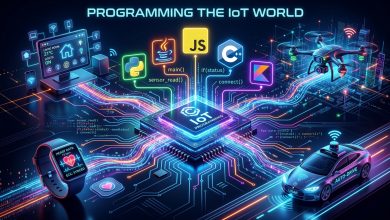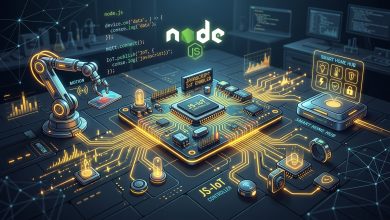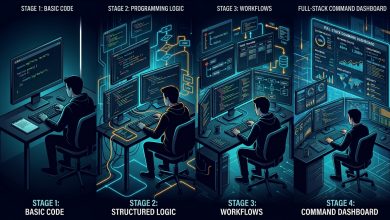


The Internet of Things (IoT) bridges the physical and digital worlds through smart homes, connected vehicles, and automated industrial environments. Behind these smart devices lies a diverse software ecosystem. Unlike traditional desktop or mobile environments where a few dominant languages rule, IoT requires a multi-layered approach spanning resource-constrained sensors, local processing hubs, and powerful cloud servers.
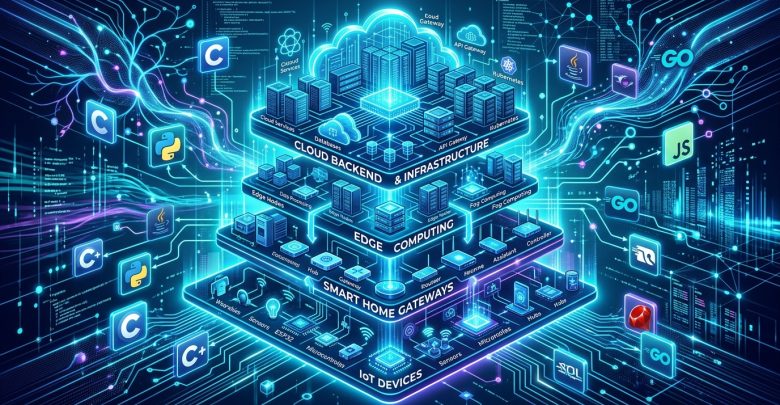
The Three Core Layers of IoT Architecture
- Sensors / Endpoints: The physical hardware that gathers real-world data. They are typically resource-constrained in terms of RAM and processing power, making low-level languages ideal for direct hardware access.
- Local Hubs / Gateways: Devices like smartphones, consoles, or mini-computers that organize local data streams and run standard operating systems.
- Central Servers / Cloud: Heavy-duty backend infrastructure that stores, processes, and analyzes massive datasets.
Top Programming Languages for IoT Development
1. Assembly
- Nature: Low-level programming language.
- Use Case: Excellent for highly constrained IoT applications where minimizing footprint and maximizing hardware efficiency are critical.
- Pros & Cons: Extremely minimal capabilities and difficult to work with, but grants absolute hardware control.
2. B# (B-Sharp)
- Nature: Specialized language designed exclusively for tiny IoT applications.
- Use Case: Runs smoothly across various platforms via an Embedded Virtual Machine (EVM).
- Pros & Cons: Ideal for lightweight, non-complex smart device projects.
3. C
- Nature: The undisputed pioneer of embedded systems.
- Use Case: Direct hardware programming and interacting with microcontrollers like Arduino.
- Pros & Cons: Offers direct RAM access and blistering performance, serving as the backbone of modern computing.
4. C++
- Nature: An object-oriented extension of C.
- Use Case: Widely used in Linux and embedded environments to handle higher-level logic while retaining close-to-metal performance.
- Pros & Cons: Powerful processing capabilities, though prone to manual memory errors if not handled carefully.
5. Go (Golang)
- Nature: Google’s concurrent-friendly system programming language.
- Use Case: Enabling multiple IoT devices to communicate and stream data simultaneously across pipelines.
- Pros & Cons: Extremely powerful for distributed systems, but requires precise coding discipline.
6. Java
- Nature: Enterprise-grade object-oriented language.
- Use Case: Heavily utilized in IoT enterprise backends and edge devices running a Java Virtual Machine (JVM).
- Pros & Cons: Follows the “Write Once, Run Anywhere” philosophy, making it a dominant choice for large-scale deployments.
7. JavaScript
- Nature: The core language of the web, adapted for hardware via Node.js.
- Use Case: Running scripts on smart hubs and microcontrollers (such as Espruino and Tessel) that support Node.js.
- Pros & Cons: Lowers the entry barrier for web developers to step into IoT hardware scripting.
8. Parasail
- Nature: Designed specifically for parallel and concurrent data processing.
- Use Case: Used when IoT projects demand intense parallel computing tasks.
- Pros & Cons: Shares a syntax similar to Java and Python, but requires a strong grasp of concurrency concepts.
9. PHP
- Nature: Primarily known for web development.
- Use Case: Writing IoT microservices or running on single-board computers like Raspberry Pi configured with a LAMP stack.
- Pros & Cons: Surprising adaptability for web-connected IoT microservices.
10. Python
- Nature: High-level, readable, and highly versatile language.
- Use Case: Rapid IoT prototyping, data science integration, and interacting with microcontrollers (via MicroPython) or voice assistants like Amazon Alexa.
- Pros & Cons: Highly lightweight and powerful for modern computational tasks.
11. Rust
- Nature: Open-source systems language created by Mozilla.
- Use Case: Safe concurrent data sharing across threads on modern multi-core IoT processors.
- Pros & Cons: Prevents memory safety bugs natively, though it has a steep learning curve.
12. Swift
- Nature: Apple’s native language for iOS development.
- Use Case: Building mobile applications that act as central hubs to monitor and command smart home ecosystems.
- Pros & Cons: Essential for iOS-driven IoT control interfaces.
Choosing the Right Language
There is no single “best” language for IoT. The choice depends entirely on the project layer you are working on: use C/C++ for low-level sensor firmware, Python or JavaScript for rapid application layers and gateways, and Java or Go for robust cloud backends. Often, combining multiple languages across the architecture yields the most successful IoT solution.
#IoT #InternetOfThings #EmbeddedSystems #ProgrammingLanguages #SmartTech #TechTrends #SoftwareDevelopment