


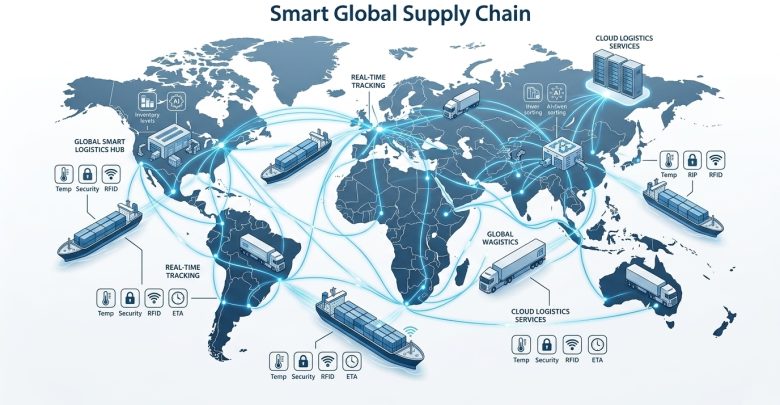
The integration of Industrial Internet of Things (IIoT) into logistics is not merely an operational upgrade; it is a strategic necessity. By evolving from legacy systems—such as manual scanners and basic RFID tags—toward a fully connected ecosystem, the logistics industry is redefining efficiency, security, and global resource management.
1. The Evolution of Logistics Infrastructure
Historically, logistics relied on manual interventions and siloed data collection (e.g., barcodes and manual scanners). Drawing parallels from the factory floor—where CNC machines and SCADA systems paved the way for automation—the modern logistics sector is leveraging existing data infrastructures to transition into IIoT. This shift allows for the seamless integration of real-time monitoring across warehousing and transportation.
2. Enhancing Security and Accountability
Cargo theft remains a multi-billion dollar challenge globally. IIoT provides a robust solution by enabling:
- Real-Time Tracking: Constant visibility of assets, regardless of their location.
- Item-Level Monitoring: Moving beyond simple container tracking to individual item surveillance, ensuring accountability, reducing insurance disputes, and minimizing financial losses.
3. Intelligent Warehousing and Quality Control
The adoption of low-cost, high-efficiency technologies like RFID and wireless readers has revolutionized warehouse management.
- Real-Time Visibility: Inventory levels are monitored dynamically, preventing budget overruns caused by stockouts or overstocking.
- Automated Quality Assurance: IoT sensors continuously monitor environmental parameters such as temperature and humidity. Immediate alerts are triggered when conditions approach critical thresholds, ensuring product integrity—a vital feature for perishable goods.
4. The Global Impact: Solving Food Insecurity
While global efforts have focused on increasing food production, efficient distribution is the missing link. IIoT is the catalyst for closing this gap:
- Optimizing the Cold Chain: By monitoring storage and transportation parameters, IIoT significantly reduces food spoilage.
- Real-World Success: India’s milk distribution network serves as a benchmark, demonstrating how these technologies optimize the supply chain.
- Addressing Hunger: The convergence of high-speed networks, affordable sensors, and easy installation allows for precise control over food distribution. By minimizing waste during transit and storage, IIoT directly contributes to tackling global hunger.
Strategic Summary for Stakeholders
| Focus Area | Impact of IIoT |
| Operational Efficiency | Transition from manual scanning to real-time, automated data flow. |
| Asset Security | Massive reduction in cargo theft and insurance discrepancies. |
| Quality Management | Predictive alerts based on humidity and temperature thresholds. |
| Global Sustainability | Reduction in food waste, directly alleviating global food insecurity. |
Tags
#IIoT #Logistics #SupplyChainManagement #SmartWarehousing #FoodSecurity #RFID #IndustrialIoT #GlobalLogistics #ColdChain