

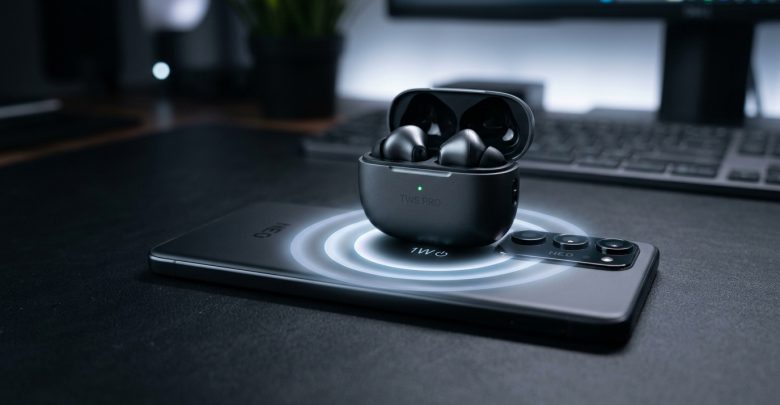
A significant technological leap in wireless power transfer has emerged: NFC Wireless Charging (WLC). This innovation allows smartphones to charge small, low-power gadgets using existing NFC hardware, eliminating the need for bulky, dedicated wireless charging components in compact devices.
What is NFC Wireless Charging (WLC)?
Unlike traditional high-wattage wireless charging (Qi), which is designed for smartphones and requires dedicated induction coils, WLC via NFC is engineered specifically for the Internet of Things (IoT) ecosystem.
Key Characteristics:
- Power Output: It delivers approximately 1 Watt of power. This is not intended for fast-charging smartphones, but rather for keeping small, low-power electronics powered up.
- Hardware Efficiency: It leverages the existing NFC antenna already present in most smartphones, meaning no new hardware is required to enable this feature.
- Target Devices: Ideal for small-form-factor gadgets such as True Wireless Stereo (TWS) earbuds, smart bands, and small health trackers.
Why WLC Changes IoT Design
The implementation of WLC via NFC offers major advantages for manufacturers and users alike:
- Cost Reduction: By using the existing NFC chip, manufacturers no longer need to include expensive, dedicated wireless charging modules in small IoT devices.
- Space Optimization: Removing dedicated charging hardware frees up critical space inside tiny gadgets. This extra room can be utilized for larger batteries or additional sensors, enhancing the device’s overall capability.
- Simplified Ecosystem: Smartphones act as the “power hub” for an entire ecosystem of small wearables, requiring no extra cables or specialized charging pads.
The Strategic Shift in Smartphone Design
As reported by Android Authority, this technology represents a design paradigm shift. Smartphone manufacturers can provide the convenience of wireless charging for accessories without needing to integrate complex reverse-charging systems.
By transforming the NFC antenna into a dual-purpose component (communication and power transfer), the industry is moving toward:
- Smaller, sleeker wearable devices.
- Lower production costs for IoT accessories.
- A more streamlined, integrated connected-device experience.
Conclusion
While WLC via NFC will not replace traditional fast-charging for mobile phones, it is the missing piece of the puzzle for the IoT landscape. It effectively enables a “charge anywhere” scenario for wearables, making our digital ecosystems more compact, efficient, and interconnected.
Tags:
#NFC #WirelessCharging #WLC #IoT #WearableTech #Innovation #TechTrends #SmartGadgets #BatteryTech #MobileEngineering