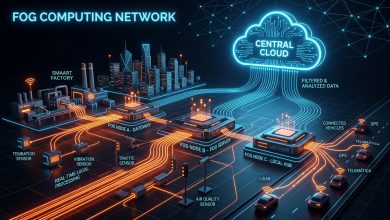


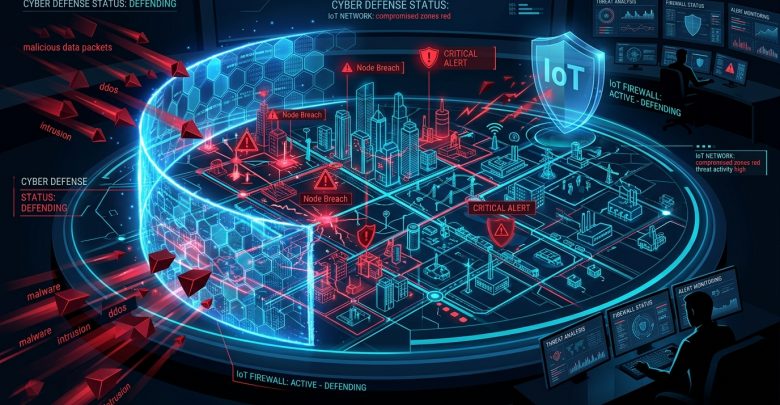
As the Internet of Things (IoT) expands rapidly into smart homes, smart cities, industrial automation, and healthcare, the sheer volume of data generated and transmitted via cloud ecosystems continues to grow. However, this massive proliferation of connected devices also significantly increases vulnerability to cyberattacks, data breaches, and severe disruptions that can impact both digital infrastructure and real-world safety.
To help system developers better understand security vulnerabilities and implement robust protective measures, this guide explores a structured classification of IoT attacks and examines the critical issue of system interruptions.
Core Components and Security Requirements of IoT
An IoT ecosystem fundamentally relies on four key components:
- People
- Smart Objects (Devices & Sensors)
- Contextual Environments
- Processes
Because IoT architectures handle vast amounts of sensitive, real-time data, they require rigorous security processes—including identification, authentication, confidentiality, non-repudiation, and reliability. Failing to secure these layers opens the system to a wide array of cyber threats.
Taxonomy of Attacks in IoT Networks
IoT attacks can be categorized across various vectors based on their objectives, methodologies, and target components:
1. Identity & Spoofing Attacks
- SPOOFING: One of the most critical threats, where an attacker intercepts information from an unsecured channel and transmits fake data. It often serves as a stepping stone for routing attacks, replay attacks, or Denial of Service (DoS). Attackers may also use spoofing to mislead users into entering credentials on fake pages (phishing).
- SYBIL: A malicious node generates multiple fake identities simultaneously, severely undermining data integrity and normal network routing behavior while masquerading as a legitimate entity.
2. Availability & Disruption Attacks
- DOS (Denial of Service): Overwhelms network services, rendering servers, devices, and resources inaccessible to legitimate users.
- INTERRUPTION: Specifically targets system availability to knock services offline, which can cause catastrophic failures in mission-critical environments.
3. Data & Information Integrity Attacks
- INFORMATION LEVEL ATTACK: Exploits the open environments of IoT sensors to manipulate data as it is being continuously collected, generated, or published.
- ALTERATION: Modifies valid data packets to disrupt the overall operational logic and integrity of the system.
- FABRICATION: Compromises authentication structures by injecting false data or commands, paving the way for larger attacks.
- MESSAGE REPLAY: Captures and stores legitimate data messages to replay or modify them later for malicious gains.
4. Confidentiality & Eavesdropping Attacks
- EAVESDROPPING: Secretly monitors and intercepts communication channels to compromise data confidentiality.
- ACCESS LEVEL ATTACK: Bypasses authorization controls (either actively or passively) to conduct unauthorized wiretapping and harvest sensitive information.
5. Hardware & Device-Specific Vulnerabilities
- DEVICES PROPERTY: Exploits the physical and computational constraints of IoT hardware (such as limited processing power, memory, and battery life) by draining resources or feeding corrupted data.
- HOST-BASED ATTACKS: Targets the diverse mix of hardware and software hosts that comprise the IoT infrastructure.
- USER / SOFTWARE / HARDWARE COMPROMISE: Involves illicit collusion or security compromises between users, software components, or physical hardware nodes within the ecosystem.
6. Structural & Strategic Attacks
- ADVERSARY LOCATION: Involves internal or external attackers mapping out device locations and monitoring traffic patterns through trial and error to extract critical insights.
- ATTACKS STRATEGY: Combines physical and logical methods to disrupt the overarching operational strategy of an IoT deployment.
- MAN-IN-THE-MIDDLE (MITM): An unauthorized entity positions itself between two communicating nodes to transparently intercept and alter data exchanges.
- PROTOCOL BASED ATTACKS: Involves hijacking or deviating from standard security protocols to strip away vital security features.
The Consequence of System Interruptions
Interruptions in IoT ecosystems go beyond simple connectivity drops. When physical sensors, smart medical devices, or industrial control systems experience forced downtime or deliberate interruptions, the consequences can range from financial losses to immediate physical danger in real-world environments.
Conclusion
Recognizing these attack vectors is the first step toward building resilient architecture. By mapping out security flaws through a clear threat taxonomy, developers can proactively integrate encryption, multi-factor authentication, intrusion detection systems, and secure communication protocols to safeguard their IoT data and infrastructure.
#IoT #CyberSecurity #IoTAttacks #InformationSecurity #SmartCity #TechSafety #NetworkSecurity #SmartHome #VulnerabilityManagement