


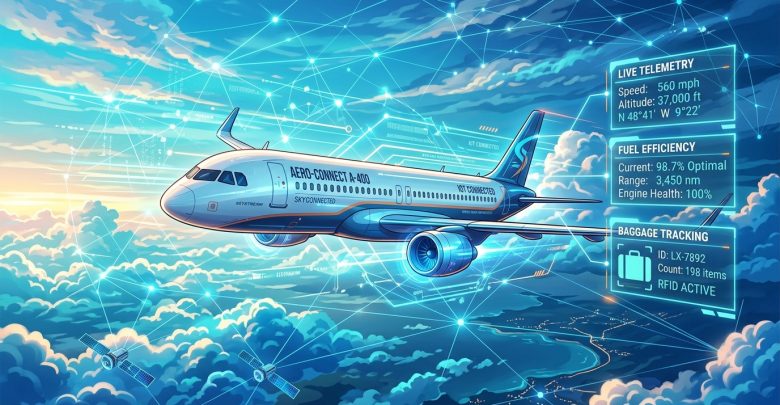
The Internet of Things (IoT) is effectively and reliably reshaping the airline industry. From real-time baggage tracking to advanced cabin environment controls, IoT equips airlines with cutting-edge tools to minimize or eliminate some of the most common customer pain points, such as lost luggage, flight delays, and subpar service.
Here is how leading global airlines are implementing IoT solutions:
1. Predictive Maintenance and Mechanical Diagnostics
- The Solution: Equipping aircraft and loading equipment with smart sensors to gather massive volumes of data (over half a terabyte per flight) and analyze it in real time.
- Industry Example: Virgin Atlantic utilizes IoT tools on its Boeing 787 fleet and loading gear. By processing live data streams, the airline identifies and resolves mechanical issues before they occur, resulting in safer flights, fewer delays, and an enhanced passenger experience.
2. Smart Baggage Tracking via RFID
- The Solution: Addressing one of travelers’ biggest anxieties—lost luggage—by implementing Radio Frequency Identification (RFID) technology paired with mobile applications.
- Industry Example: Delta Air Lines pioneered RFID baggage tracking in the U.S. The Delta app gives passengers full visibility into their luggage’s location throughout the entire journey—from the tarmac and inside the aircraft to the baggage carousel—earning Delta top rankings among U.S. carriers.
3. Fuel Optimization and Environmental Impact Reduction
- The Solution: Leveraging flight data analytics platforms to determine precise navigation routes, cut down waste, and optimize fuel consumption.
- Industry Example: AirAsia partnered with GE to utilize advanced flight efficiency services. By analyzing flight data, the airline optimizes fuel burn and reduces its environmental footprint, projecting an estimated $30 to $50 million in cost savings over five years.
4. Automated Airport Processes and Ticketing
- The Solution: Integrating systems to automate tedious pre-flight processes, streamlining operations, and reducing friction at the airport.
- Industry Example: JetBlue uses IoT concepts to automate ticketing and seat allocation. Tickets are automatically issued post-reservation, and seats are assigned 24 hours prior to departure based on passenger preferences. This automation reduces delays caused by manual bottlenecks and frees up staff for critical operational tasks.
5. Personalized Services Through Virtual Reality & Big Data
- The Solution: Implementing immersive technologies like Virtual Reality (VR) while collecting and analyzing big data to understand passenger behavior and preferences.
- Industry Example: Qantas, in partnership with Samsung, introduced VR headsets to deliver a unique in-flight experience while gathering valuable passenger engagement data. By cross-analyzing this data across systems, Qantas can offer highly personalized recommendations tailored to each traveler’s profile.
The Future of IoT in the Skies
While IoT may not make air travel entirely flawless, it undeniably transforms it into a much more seamless and enjoyable experience. The capabilities of IoT are endless, holding the potential to continuously revolutionize the aviation industry for the benefit of both passengers and airlines alike.
#IoT #Aviation #SmartAirlines #DigitalTransformation #TechTrends #ConnectedTravel