

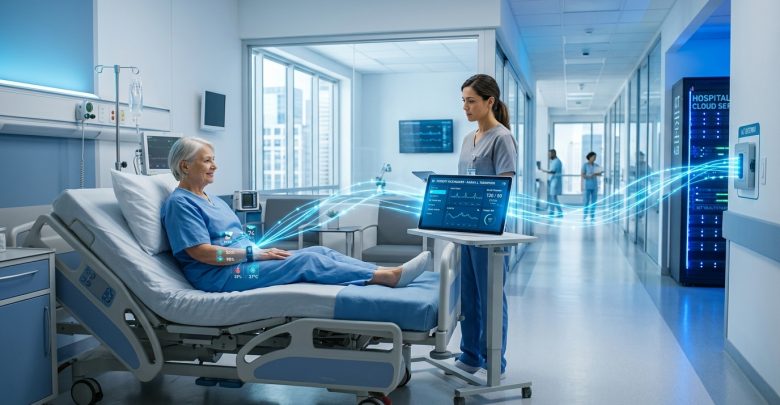
The 21st century is witnessing a paradigm shift in healthcare, driven by the Internet of Things (IoT). Moving beyond smart factories and warehouses, IoT is saving lives and optimizing hospital operations. Here are the 6 key applications of IoT in modern healthcare:
1. Reducing Emergency Room Wait Times
IoT-enabled systems are streamlining ER operations. For instance, the Mt. Sinai Medical Center in New York successfully reduced wait times by 50% for ambulatory patients by implementing innovative IoT tracking and management systems.
2. Remote Patient Monitoring (Telehealth)
Telehealth removes the burden of physical travel for patients. By monitoring vitals remotely, IoT reduces costs, minimizes unnecessary hospital visits, and significantly improves the quality of life, especially for patients with limited mobility.
3. Predictive Maintenance of Critical Hardware
Medical equipment failure can be a matter of life and death. Philips’ e-Alert solution utilizes IoT to monitor medical hardware in real-time. Instead of waiting for a breakdown, the system alerts hospital staff to potential issues before they cause a system failure.
4. Tracking Assets, Staff, and Patients
Managing large hospital campuses with thousands of patients and staff is a complex task. Real-time locating systems (RTLS) based on IoT allow for the efficient tracking of medical equipment, staff activity, and patient locations, ensuring safety and optimizing workflows.
5. Advanced Medication Management
IoT is entering the field of pharmacology. Sensor-embedded “smart pills” (microscopic sensors) can send signals to external devices to confirm proper dosage. Furthermore, smartphone applications allow patients to track their health metrics and improve medication adherence.
6. Managing Chronic Diseases
IoT-powered devices (like Fitbit) and dedicated platforms (e.g., Health Net Connect for diabetic management) allow for continuous health monitoring. This data is shared with physicians to improve clinical outcomes and reduce long-term medical costs for chronic conditions.
Key Takeaways for the Future of Healthcare:
- Efficiency: Automated workflows save time for both staff and patients.
- Proactivity: Predictive maintenance and real-time monitoring shift healthcare from “reactive” to “preventive.”
- Connectivity: Seamless data flow between patients and doctors empowers personalized medicine.
Tags:
#IoTHelcare #Telehealth #SmartHospitals #DigitalHealth #MedTech #InternetOfThings #PredictiveMaintenance #HealthcareInnovation