

The Connected Vehicle Ecosystem: Architecting Next-Generation Automotive IoT Infrastructure

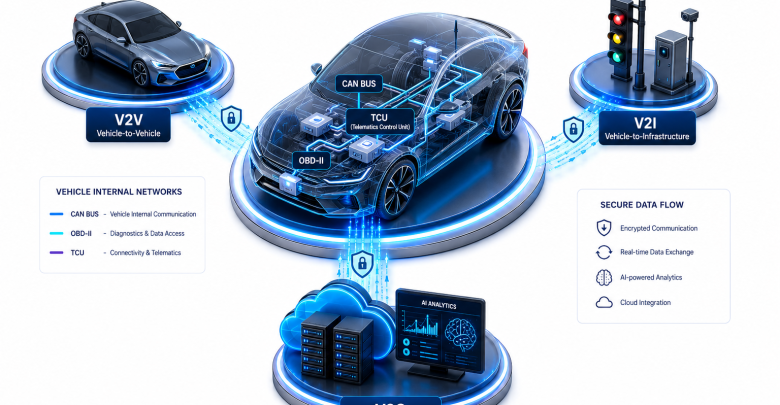
The automotive industry is undergoing a significant transformation with the advent of the Internet of Things (IoT). Connected vehicles are at the forefront of this evolution, leveraging advanced sensor arrays, connectivity modules, and cloud computing to enhance safety, operational efficiency, and the overall driving experience. This guide explores the architecture, critical components, and future trends of connected vehicles within the modern IoT ecosystem.
Understanding Connected Vehicles in IoT
Connected vehicles utilize embedded sensors, communication modules, and cloud computing to facilitate real-time data exchange. These vehicles can interact with other vehicles (V2V), surrounding infrastructure (V2I), pedestrians (V2P), and the cloud (V2C) to improve road safety, traffic flow, and urban mobility management.
Key Components of Connected Vehicles
To function as intelligent nodes in an IoT network, connected vehicles rely on several integrated technologies:
- Telematics Control Unit (TCU): The central communication hub that enables secure data exchange with the cloud and external entities.
- On-Board Diagnostics (OBD): A diagnostic system that continuously monitors vehicle health, performance metrics, and engine status.
- GPS and Navigation Systems: Provides high-precision route optimization, location tracking, and geofencing capabilities.
- Advanced Driver Assistance Systems (ADAS): Includes safety features like lane departure warnings, adaptive cruise control, and collision avoidance systems.
- 5G and Edge Computing: Facilitates ultra-low latency communication, allowing for near-instantaneous real-time data processing critical for safety.
Applications of IoT in Connected Vehicles
The integration of IoT in the automotive sector extends far beyond basic connectivity:
- Fleet Management: Enables real-time vehicle tracking, fuel consumption monitoring, and data-driven predictive maintenance.
- Smart Traffic Management: Aggregated vehicle data helps reduce urban congestion and improves overall traffic mobility.
- Autonomous Driving: IoT provides the data backbone required for AI-powered self-driving capabilities.
- Enhanced In-Vehicle Experience: Offers advanced infotainment, personalized driver settings, and remote diagnostics for a seamless user experience.
Benefits of IoT in Connected Vehicles
- Improved Safety: Advanced collision prevention systems, automated emergency responses, and driver behavior analysis.
- Enhanced Efficiency: Optimized real-time navigation and reduced vehicle downtime through proactive monitoring.
- Cost Savings: Predictive maintenance cycles significantly reduce repair costs and extend the operational lifespan of the vehicle.
- Environmental Benefits: Better fuel optimization and reduced emissions contribute directly to global sustainability goals.
Challenges and Considerations
Despite the numerous advantages, the adoption of connected vehicles requires addressing specific hurdles:
- Cybersecurity Threats: As vehicles become more connected, protecting against unauthorized access is critical.
- Data Privacy: Ensuring the security and anonymity of driver data is a top regulatory priority.
- Infrastructure Limitations: Widespread adoption depends on the maturity of 5G networks and smart city infrastructure.
Future Trends in Connected Vehicles
- Integration with AI and Machine Learning: Moving toward deeper decision-making and advanced autonomous functions.
- Blockchain for Secure Transactions: Utilizing distributed ledgers to ensure data integrity and secure communication between vehicles and infrastructure.
- Vehicle-to-Everything (V2X) Communication: Expanding the connectivity web to create truly intelligent transportation networks.
- Edge Computing Expansion: Processing more data closer to the source to further reduce latency and increase connectivity speeds.
Conclusion
The convergence of IoT and automotive technology is fundamentally reshaping the future of transportation. Connected vehicles promise a safer, more efficient, and sustainable driving experience. As technology continues to advance, both businesses and consumers must embrace this digital transformation to unlock the full potential of the IoT-enabled automotive sector.
Tags: Connected Vehicles | Automotive IoT | Telematics Control Unit | V2X Communication | Fleet Management | Smart Traffic Systems | Vehicle Safety | Autonomous Driving | Edge Computing | OBD Diagnostics